A thorough Step-by-Step Guide to managing
projects successfully, with particular emphasis
on real-world, on-the-job application
Managing Successful Projects
Real World Skills for Project
Managers & Project Teams
APRIL 18-19 2001 w CENTURY HOTEL w KUALA LUMPUR

WIDELY IMPLEMENTED AROUND THE WORLD!
Powerful project management skills to achieve success,
both from a project perspective and from an enhanced
day-to-day business management perspective

Led by
Steven Lesser
Highly Experienced & Highly Rated Project Management Expert
Conducted Project Management Programs in the USA,
Australia, New Zealand and Throughout South East Asia

98% of participants rated the overall quality of the workshop as either “excellent” or “outstanding”
-
100% of participants stated that they would recommend this program to others in their organization!
-
why you should attend
who should attend
Course Content
registration
catch the
WORM!
Another World-Class Seminar brought to you by
PRIZE DRAW
worth over RM2,000
Click here!

 
W H Y  A T T E N D
PROJECT MANAGEMENT AT IT’S BEST...
  • Structured around a 4-Phase Process which provides a Step-By-Step Framework for learning and doing Project Management back on the job
  • Addresses the 4 Major Project Management Phases as well as Human Dynamics critical to project implementation and successful completion
  • Managing Successful Projects stresses all of the elements critical to conducting successful projects, including:

    • Efficient use of time
    • Up-front planning
    • Consensus development
    • Delineation of clear and specific activities and tasks
    • Development of realistic and feasible timelines
    • Analysis of resource requirements task.


    As you work through each step of the project management process, you will learn strategies to carry out each step of the process and learn to use work tools and job aids, including:

    • Planning Aids
    • Project monitoring tools
    • Report formats
    • Measurement/assessment tools.


    You will also learn to apply a simple, but powerful communication strategy, based on principle that various recipients of project information require different information in different forms at different times. You learn to analyze the varying information need of project constituents and plan communications accordingly.
     
    Program Benefits

  • Distinguish between projects and ongoing corporate operations
  • Define the purpose of a project and a project’s scope and boundaries, goals and objectives
  • Identify key constituents of a project including project sponsor, customers and project team members
  • Develop consensus early in the project among project constituents about key project specification, including:
    • Project goals and objectives
    • Tangible and intangible benefits
    • Financial and non-financial requirements
    • Potential risks
    • Key deadlines
    • Cost/benefit tradeoffs
  • Develop cost benefit analysis that go beyond just the numbers but also evaluate financial and non-financial benefits and resources as well as cost/benefit tradeoffs
  • Analyze communication needs and plan appropriate communication strategies throughout the project lifespan
    • The No.1 factor in project success
  • Develop detailed project plan which incorporates:
    • Major project activities
    • Task and sub-tasks for each major activity
    • Timelines for activities, tasks and sub-tasks
    • Project budget including personnel and non-personnel resources
  • Identify and limit risks to a project using a variety of problem-solving strategies at the individual and team level
  • Plan effective and efficient project team meetings
  • Employ monitoring strategies for the project and anticipate necessary adjustments through analysis of:
    • Timeline updates
    • Task/person relationships
    • Resource expenditure rate
    • Task completion reports
  • Evaluate project success and ensuring smooth transfer of responsibility for support and maintenance of project outcomes.
  • Book your seats now! Tel: (03) 7044 666 / 777 / 888, fax: 03-7044 484 or e-mail: seminars@rayma.com.my .
    W H O  S H O U L D  A T T E N D

    Immediate benefit to anyone who does project work:
  • Inexperienced project managers and teams benefit by learning a step-by-step framework for successful project management
  • Experienced project managers and teams add to their knowledge by gaining the latest perspective on project management
  • Project managers who depend on project management software balance their skills by learning how to think about human factors that impact project success.
  • Team attendance highly recommended
    This is to facilitate successful implementation of the theory learned and establish a common framework to practice in real-life environment.

    Certificate of Participation will be awarded.
     
    YOU WILL RECEIVE POWERFUL RESOURCES

    • PROJECT MANAGEMENT HANDBOOK

    • detailing descriptions and samples of the strategies used to carry out each step of the project management process for use back on-the job
    • WORK TOOLS AND JOB AIDS

    • including planning aids, project monitoring tools, report formats and measurement / assessment tools
    • PARTICIPANTS WORKBOOK AND CASE STUDY

    • which includes all the worksheets and other materials that are used during workshop activities to stimulate a "real world" project situation
    • INTRODUCTION TO MICROSOFT PROJECT HANDBOOK

    • an invaluable resource to help with project software
    • HANDOUTS

    • related to the program and industry issues relevant at the time of this program
    R A F F L E   D R A W !

    All registered participants will be eligible for a special
    on-site draw to win an absolutely FREE PowerTools on CD-Rom
    Immediate FREE ACCESS
    to 3 of the 40 available PowerTools, visit: InfoWorksTools.com

    P R O G R A M   C O N T E N T

    Case Study Approach is used throughout the program. Each phase of the project management process is applied to the case in class discussion and team exercises.
     
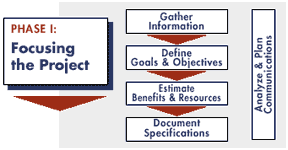
    PHASE 1: FOCUSING THE PROJECT
    GATHER INFORMATION
    • Specifying project purpose
    • Identifying project constituents and attending to their needs
    • Identifying key constituent concerns
    • Collecting information and developing consensus
    DEFINE GOALS AND OBJECTIVES
    • Relationship of customer expectations to goals and objectives
    • Criteria for effective project goals and objectives
    • Procedure for translating expectations into goals & objectives
    • Criteria for set of project goals and objectives
    ESTIMATE BENEFIT AND RESOURCES
    • Estimating and quantifying tangible and intangible benefits
    • On-budget and off-budget costs
    • Development and operational costs
    • Incremental costs
    • Non-financial costs
    DOCUMENT PROJECT SPECIFICATIONS
    • Goal/objective statements
    • Summary of resource requirements
    • Risk identification
    • Key deadlines
    • Comparison of benefits and resource requirements
    ANALYZE AND PLAN COMMUNICATIONS
    • Differing concerns of constituents
    • Selecting information based on constituent concerns
    • Selecting a communication approach
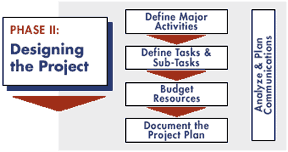
    PHASE 2: DESIGNING THE PROJECT
    DEFINE MAJOR ACTIVITIES
    • Definition of major activities, tasks and sub-tasks
    • Process for defining major activities
    • Evaluating major activities
    DEFINE TASKS AND SUB-TASKS
    • Criteria for specification of tasks and sub-tasks
    • Numbering of tasks and sub-tasks
    • Creating timelines for tasks and sub-tasks
    BUDGET RESOURCES
    • On-budget versus off-budget costs
    • Specifying individuals versus staff positions
    • Managing by time and dollars
    • Assessing non-personnel costs
    DOCUMENT THE PROJECT PLAN
    • Project timeline chart
    • Person-by-task chart
    • Updating project specifications
    • Presenting the plan
    ANALYZE AND PLAN COMMUNICATIONS
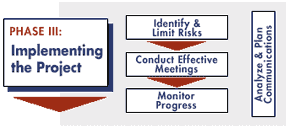
    PHASE 3: IMPLEMENTING THE PROJECT
    IDENTIFY AND LIMIT RISKS
    • Importance of early problem identification
    • Team ownership of problems
    • Convergent and divergent thinking
    • Brainstorming techniques
    • Prioritization techniques
    CONDUCT EFFECTIVE MEETINGS
    • Characteristics of effective meetings
    • Strategies for planning effective meetings
    • Key elements of an agenda
    • Meeting management
    • Evaluating meeting effectiveness
    • Informal meetings
    MONITOR PROGRESS
    • Responding to change
    • Information collection activities
    • Monitoring progress by timeline
    • Monitoring progress by task/person
    • Monitoring resource expenditure rate
    • Monitoring by task description
    ANALYZE AND PLAN COMMUNICATIONS
    PHASE 4: TRANSFERRING CONTROL
    EVALUATE PROJECT SUCCESS
    • Focus on evaluation users
    • Information collection
    • Information analysis
    • Information reporting
    COMPLETE PROJECT CHECKLIST
    • Documenting project activities and resource expenditures
    • Developing manuals and training programs/materials required for post-project operations
    • Providing feedback to team members
    • Debriefing the project team
    ANALYZE AND PLAN COMMUNICATIONS
    R E G I S T R A T I O N   D E T A I L S
    Date
    Time
    Venue
    April 18-19, 2001
    9.00am - 5.00pm
    Century Hotel, Kuala Lumpur
    Web Registration Form
    Fees
    Early Bird
    Incentive
    RM1,280.00 per person, inclusive of course materials, lunches, refreshments
    Take RM200 OFF the fee - pay before March 16, 2001
    Take another 10% OFF for 3 or more from the same organisation
    FREE Subscription to The Economy Commentary
    Reservation
    Reservation can be made by telephone, telefax or by e-mail.  Registration is confirmed on receipt of registration form and payment must be cleared before program date.  If unable to do so due to government policy or company procedure, please advise late payment in writing.
    Cancellation
    Policy
    Cancellations are valid only in writing. Full refunds applicable if written notice is received at least 2 weeks before each program. A 25% cancellation fee will be levied for cancellations received less than 2 weeks before the program. No refunds after commencement of seminar. Substitutions are allowed.
    SBL SCHEME
    HRD COUNCIL
    RAYMA is an Approved Training Provider with HRDC whereby approved training programs can qualify for 75% rebate of the fee. Please apply through your HR Department at least 30 days in advance of the program.
    THE RAYMA
    GUARANTEE
    A full refund to you if we do not deliver what we promised. 
    Just turn in your workbook at the end of the day!
    WE COME
    TO YOU!
    In-company Customised Learning Solutions
    Need to develop entire teams? All our public programs, based on best practices, can be developed in partnership with you to meet your organization's specific requirements. DETAILS
    REGISTRATION
    & ENQUIRIES
    Web Registration Form
    RAYMA Management Consultants (M'sia) Sdn Bhd
    2B Jalan SS24/13, Taman Megah, 47301 Petaling Jaya 
    Selangor Darul Ehsan, Malaysia 
    Tel: +60 3 7044 666 
    Fax: +60 3 7044 484 
    E-mail: seminars@rayma.com.my
    -
    -
    back to seminars  
    Step-in and WIN!
    e-Love
    Search for any Book or Author

    RAYMA
    home  |  e-mail  |  sitemap
    nothing's
    impossible!
    Contents © Copyright 2001 RAYMA | Privacy Information